
Green Traveler’s Dilemma Choosing Convenience Over Sustainable Products – This weekend I stopped by REI to look for some hiking boots or trail running shoes.
Ideally, I want a shoe that is durable, supportive, breathable, extremely comfortable, and waterproof. Definitely waterproof.
I have put off hiking on damp and rainy days because I have not yet purchased what I feel is an essential item.
But choosing Gore-Tex means I will not be.

Choose convenience or Sustainable Products?
In my search for waterproof travel shoes I discovered that the seemingly only available option is Gore-Tex.
I admit that I didn’t know much about Gore-Tex until recently and even what I did know was limited to “it’s bad for the environment.”
After doing a little more research I’ve learned that Gore-Tex is essentially the same material as Teflon®, a perfluorochemical, PFC.
If you don’t know much about Teflon you should know this:
Cooking with Teflon pans can kill birds and it’s chemical compounds have been found even in polar bears in the Arctic.
The never-ending green traveler’s dilemma
If you want to know more about Gore-Tex I’ve listed some additional resources below.
But the key thing is this: the chemicals in Gore-Tex are bad for my personal health and they are bad for the environment.
But, wouldn’t it be nice to have breathable, waterproof shoes?
Concerns with your green values
I want to buy “made in America” products. I really do.
The problem is, I often can’t find them.
Sometimes when I do find them, I can’t really justify affording them.
It is an ongoing situation… especially when my children were younger and were growing out of their clothes quickly.
If I buy second-hand, not-made-in-America, is that better than buying local products new?
We are all doing the best we can, and even by being mindful of our choices we are already ahead of most.
So, I’m stuck with this green traveler’s dilemma:
Will choosing Gore-Tex hiking boots/shoes that will be convenient and practical for me (short term) or do I find something else that will, in the end, be better for my health and the environment (long term)?
Green Travel Gear Products on the Market
With so many new Green Travel Gear products on the market, it’s hard to know what to trust.
Here’s a collection of our favorite, tried and true, environmentally-friendly travel gear.
To buy it for yourself, or read more on Amazon, click the image or the title.
Green Travel Gear
[easyazon_link keywords=”Klean Kanteen Stainless Steel Water Bottle” locale=”US” tag=”gogreentravel-20″]Klean Kanteen Stainless Steel Water Bottle[/easyazon_link]
How it’s green: Klean Kanteens are BPA (bisphenol A)-free and made of stainless steel, so they last longer than plastic bottles.
Plus, they eliminate the need for wasteful bottled water.
See our Klean Kanteen Stainless Steel Water Bottle Review here.
[easyazon_link keywords=”Mountainsmith Recycled Backpack” locale=”US” tag=”gogreentravel-20″]Mountainsmith Recycled Eco-Friendly Backpacks (for Men and Women)[/easyazon_link]
How it’s green: Mountainsmith’s recycled backpacks are made from recycled plastic bottles.
There are many styles to choose from for women, men, and youth, so every traveler should be able to find one suited to her needs.
Still on the fence?
Read our review of the Mountainsmith Lily recycled backpack and our review of the Ivy by Mountainsmith recycled backpack

How it’s green: The Wrap-N-Mat is a great alternative to disposable plastic baggies, plus it’s small and light, so you can take it anywhere.
[easyazon_link keywords=”Wrap-N-Mat” locale=”US” tag=”gogreentravel-20″]Wrap-N-Mat[/easyazon_link]
How it’s green: Microfiber towels take up far less space than normal towels, so you can pack light.
And the lighter you pack, the less of an environmental impact your luggage will have.
How it’s green: With quick-dry underwear, you only need to pack a few pairs, even for long trips.
You can wash them in the sink or at your campsite, let them dry overnight, and wear them the next day.
[easyazon_link identifier=”B0036SBFIO” locale=”US” tag=”gogreentravel-20″]Ex Officio Quick-Dry Underwear[/easyazon_link]
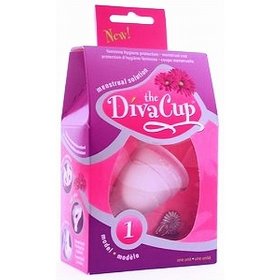
How it’s green: Say goodbye to tampons and pads.
The Diva Cup is the perfect solution for every (female) green traveler.
It’s made of silicone and it’s easy to clean and store.
[easyazon_link identifier=”B000FAG6XA” locale=”US” tag=”gogreentravel-20″]Diva Cup[/easyazon_link]
Note: We only recommend products we’ve tried out and liked.
We do link through affiliate links when they are available.
We are not compensated to provide opinion on products, services, websites, or other topics.
We will only recommend products or services that we believe, based on our experience, are worthy of endorsement.
Any product claim, statistic, quote or other representation about a product or service should be verified with the manufacturer or provider.
Resources about Gore-Tex:
- Minnesota Department of Health on PFCs
Amazon Green – Green Travel Products
Don’t you just feel better when you buy green products?
We know it is good to shop local.
It boosts the economy where you live and wherever you are.
You are able to keep the tax dollars where you live or where you are visiting.
Sadly, many “mom and pop” shops haven’t been able to compete with the big box retailers, and even after generations, have had to close.
This has oftentimes resulted in less choices for the consumer.
In the meantime, Amazon has launched Amazon Green.
As a consumer who likes to shop and buy green products, this could be a good thing.
On their site, Amazon displays products users tag as eco-friendly.
But is it a good way to find green travel products?
To be a really green consumer, aren’t we supposed to be walking to our nearby, non-chain, locally owned, independent store and doing more to support the local businesses in our communities?
When it was first launched, in 2008, Amazon Green was a little tricky to navigate.
And because the system is based on tags, if you search for green travel products you come up with items like:
- [easyazon_link identifier=”B000246GSE” locale=”US” tag=”gogreentravel-20″]Zojirushi Mr. Bento Stainless-Steel lined Lunch Jar, Silver[/easyazon_link]
- [easyazon_link keywords=”Planet Earth – The Complete BBC Series” locale=”US” tag=”gogreentravel-20″]Planet Earth – The Complete BBC Series[/easyazon_link] [HD DVD]
- [easyazon_link identifier=”B00OQVZDJM” locale=”US” tag=”gogreentravel-20″]Kindle[/easyazon_link]: Amazon’s New Wireless Reading Device
I do love products such as the Mr. Bento Lunch Jar because it is durable, reusable and earth-friendly.
And best of all for me besides being reusable is that it isn’t made from plastic but from safe, food-grade stainless steel.
The second item that appeared were the Planet Earth DVDs.
They are pretty cool but to be even more earth-friendly, I’d rather check them out from the library or see if they are available to watch on Netflix or even through Amazon for that matter.
I don’t actually need to own them.
And we’ve already had the debate about whether the Kindle is a good green travel device as an alternative to books.
I wouldn’t bring any of these with me on a round-the-world trip, though possibly for the Mr. Bento jar as I do like the idea of the lunch jar for on-the-go trips, day-to-day for packing lunches, etc.
So while it I wouldn’t use it for traditional travel in the implied sense of the word, I could imagine using it outside the home when someone would be more apt to make a less greener choice.
Therefore, it would still count as being a product great for travel.
Amazon Green also has a Green 3 list where users choose 3 green products they think everyone should have.
And you can find a debate about whether shipping products is green in the Amazon Green 3 Forum.
Overall, I think Amazon Green is a good idea.
And the products it shows for green travel are generally cool, but they’re not necessarily the things I would pack for a trip.
If users start to tag more products as “travel,” Amazon Green could be a great tool for eco-conscious travelers.
Right now, at its inception, it’s not as great for green traveling as I was hoping.
But it’s still fun to browse.
Sometimes “green” items are far from green, be it how they are made, where they are made, or what they are made from.
Do your research, and you will benefit greatly.
Green Stocking Stuffers for Environmentalists
We’re building on our list of stocking stuffers for travelers today with these green stocking stuffers for environmentalists on your gift list.
You can feel great about giving theses sustainable gifts from eco-friendly companies, all sized to fit in a stocking.
Clever Travel Companion tank top
One of the easiest ways to be green is to use one item for more than one purpose.
Travelers can get double duty out of their tank tops and even underwear by using Clever Travel Companion clothing.
These high-quality cotton tees, tanks, and boy-short or boxer-style underwear include hidden zippered pockets to store documents, cash, and valuables while traveling.
So much more convenient and comfortable than a traditional money belt, these Clever Travel Companion tanks are easy to stuff into anyone’s stocking.
Mountain Khakis Organic Tees
I love the soft feel of Mountain Khakis’ organic cotton, and their tees are both eco-friendly and fun, celebrating the best of nature.
These tees appeal to men and women, and are easy to roll up and stuff into a holiday stocking.
For a more spendy option for men, pick up [easyazon_link keywords=”Mountain Khakis’ polo shirt” locale=”US” tag=”gogreentravel-20″]Mountain Khakis’ polo shirt[/easyazon_link] made from recycled coffee grounds his is one of my favorite stocking stuffers for environmentalists.
Bamboo Sleep Sack
Made of viscose from bamboo, a sustainable and renewable resource and weighing only 16 oz, this sleep sack is easy to pack in its own stuff sack and will save countless hotel bed linen washings.
Just slide into this soft sleep sack and check ‘no thanks’ on hotel linen washings.
It’s a bit spendy for a stocking stuffer, but it has a lot of uses.
It’s also great for hostel and cabin stays, when the linens provided may be less than ideal.
USB Cell rechargeable battery
Get a two-pack of these USB-powered rechargeable, and they’ll last for 500 charge cycles.
No more disposable alkaline batteries!
The rechargeable function just like regular AA batteries, but when empty, travelers can pop their top to expose a USB connector that charges the batteries with their laptop.
i-Ecko Eco-Friendly Speakers
Made from recycled cardboard, these 3.25-inch cubes let you blast music sans batteries by siphoning power from MP3 players themselves.
They fold flat for travel, and can be used again and again. We think they’re perfect for playing a movie in the back seat.
These [easyazon_link keywords=”i-Ecko Speakers” locale=”US” tag=”gogreentravel-20″]speakers[/easyazon_link] will make great stocking stuffers for environmentalists who are also music lovers.
Light my Fire Sporks
We love [easyazon_link keywords=”Light my Fire sporks” locale=”US” tag=”gogreentravel-20″]Light my Fire sporks[/easyazon_link]!
Everyone in our family has his or her own (in different colors so we can tell them apart) and we bring them on camping trips and backpacking treks, as well as road trips.
We use them in place of plastic, disposable silverware in fast food restaurants, and in hotel rooms for in-room dining.
Bed Buddy Neck Pillow
This neck pillow is great for relieving tension year-round.
Just stick it in the microwave to heat it up and wrap it around your shoulders and neck.
It’s made of natural materials and has lavender and chamomile for aromatherapy.
Any environmentalist is sure to love this relaxing gift.
Nothing Nasty lip balm
This lip balm by Nothing Nasty is made of all natural, organic ingredients is good for the environment and good for your lips.
And it’s easy to add to a holiday stocking!
I love the honey and vanilla flavor.
[easyazon_link keywords=”Nothing Nasty lip balm” locale=”US” tag=”gogreentravel-20″]Nothing Nasty[/easyazon_link] also has a full line of baby and toddler products for your little one’s stocking.
What will you be gifting as green stocking stuffers for environmentalists this holiday season?
Share your stocking stuffer ideas in the comments!
Best Christmas Gifts for Travelers Concerned About Environment
Best Christmas Gifts for Travelers – Whether you’re a traveler looking for ideas for your Christmas wish list or a shopper in search of holiday gift ideas for your favorite traveler, you’ve come to the right place.
From luggage and clothing to gadgets and water bottles, this list of the best Christmas gifts for travelers is full of excellent picks.
We even have ideas for kids who like to travel.
Read on and get your holiday shopping finished early!
Ways to Travel Sustainably in an RV
Small Travel Backpack
I’m an advocate of packing light and a good backpack can make that easy.
I traveled in Argentina for 6 months with only a small travel backpack and an even smaller school backpack.
Opt for a front-loading backpack because top-loading ones make organization difficult.
Look for a backpack that’s comfortable, compact, attractive, and has lots of pockets.
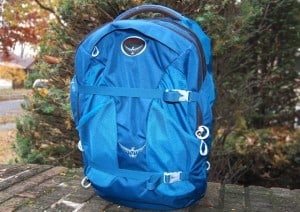
Our pick: [easyazon_link keywords=”Osprey Farpoint 40″ locale=”US” tag=”gogreentravel-20″]Osprey Farpoint 40[/easyazon_link] .
(Read our Osprey Farpoint 40 review.)
Lightweight, Rolling Carry-On Suitcase
A well-made carry-on suitcase is a gift that can last decades.
Opt for a lightweight suitcase that will make travel a breeze, so the recipient won’t have to worry as much about going over the airlines’ allowed weight.
With airlines charging steeper fees for luggage, every ounce counts.
Our pick: Atlantic Ultra Lite 22” Carry-On.
Read our lightweight luggage review for more ideas.
Pack-It Bag
A pack-it bag is a great way to stay organized while you travel.
Plus, it minimizes wrinkles, making it perfect for the business traveler.
The Eagle Creek Pack-It holds between 8-12 shirts or pants and fits into most carry-ons.
Our pick: [easyazon_link keywords=”Eagle Creek Pack-It Folder” locale=”US” tag=”gogreentravel-20″]Eagle Creek Pack-It Folder[/easyazon_link].
I’ve never owned a bag this size or of this type before and love it.
Tablet
I always thought tablets were unnecessary if you already had a laptop and a smart phone.
But after I won a Google Nexus, I have to admit it’s life changing.
It’s far easier to quickly look something up online on the tablet than it is on a phone or computer.
Plus, it’s portable.
Bringing it on the plane or train is much less cumbersome than a laptop.
I’ve really enjoyed watching movies, drafting documents, or reading on it.
Our picks: [easyazon_link keywords=”Google Nexus” locale=”US” tag=”gogreentravel-20″]Google Nexus[/easyazon_link] or [easyazon_link keywords=”Apple iPad” locale=”US” tag=”gogreentravel-20″]Apple iPad[/easyazon_link].
eReader
While tablets are great, for the truly avid reader, eReaders are just a bit better.
The batteries last longer and they don’t put quite so much strain on your eyes.
Plus, when you’re traveling a lot they are much lighter and easier to carry.
Our pick: [easyazon_link keywords=”Kindle Fire” locale=”US” tag=”gogreentravel-20″]Kindle Fire[/easyazon_link].
Noise Canceling Headphones
As the folks now with the fussy baby on the plane, I’m a bit more sympathetic when it comes to other crying children.
But, air travel is stressful enough and there’s really no comparison between a flight with noise canceling headphones and one with out.
You can read our full post on noise canceling headphones here.
Or just buy Our pick: [easyazon_link identifier=”B00M1NEUKK” locale=”US” tag=”gogreentravel-20″]Bose Quiet-Comfort[/easyazon_link].

DSLR Camera
While the iPhone may take great pictures, there’s no substitute for a DSLR camera.
If you have an aspiring photographer, avid traveler, or wildlife enthusiast in your life buy him or her a DSLR.
Our resident photography expert, Katie, detailed a full explanation about the best digital DSLR cameras for budget travelers here.
Our pick: [easyazon_link keywords=”DSLR Camera” locale=”US” tag=”gogreentravel-20″]DSLR Camera[/easyazon_link]
Dry Case for Cell Phone
This makes an excellent stocking stuffer and chances are, the recipient doesn’t already own this.
Travelers who love their gadgets and the beach are the perfect recipients of a cell phone wet bag.
These bags keep phones dry while still allowing you to use them.
They are recommended by active kayakers to poolside loungers as a great way to keep phones from getting wet.
Our pick: [easyazon_link keywords=”Dry Pack Cell Phone Case” locale=”US” tag=”gogreentravel-20″]Dry Pack Cell Phone Case[/easyazon_link].
Gift card for ebooks
If your traveler already has enough stuff to carry around, buy him or her an Amazon gift card to buy ebooks or music and just about anything he or she could possibly want.
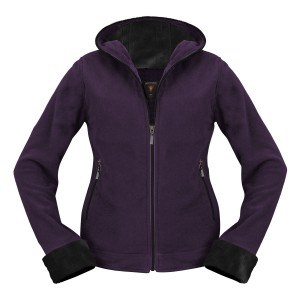
Travel Jacket or Fleece
A travel jacket isn’t just for keeping you warm.
A good travel jacket makes getting through security a breeze.
It can dress up an outfit or serve as a pillow on a long plane ride.
This year, we’ve discovered Scottevest jackets and I love them.
They’re stylish, versatile, and have tons of pockets.
Our picks: Scottevest Chloe Fleece Hoodie or Scottevest Molly Jacket.
Read our Chloe hoodie review and our Molly jacket review.
Pair of Hiking / Travel Sandals
A high-quality pair of sandals is great for walking, hiking, and travel.
I love my Chaco Unaweep sandals and wear them all summer.
The model I have is a bit bulkier than the alternatives, but I like that because it makes the sandals so comfortable and supportive.
When you’re picking out a pair of travel sandals, make sure they’re comfortable to wear for long periods of time, high quality, adjustable, and versatile.
Our pick: [easyazon_link identifier=”B002CAOFLQ” locale=”US” tag=”gogreentravel-20″]Chaco Unaweep sandals[/easyazon_link].
(Read our Chaco Women’s Unaweep review.)
Pair of Vegan Walking Shoes
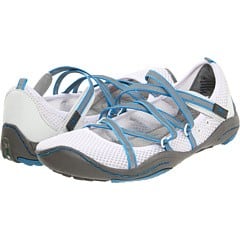
What’s the most practical item you can buy a traveler?
A pair of excellent walking shoes.
Vegan shoes (not made out of leather) are a must for sustainable travelers and there’s a short list of vegan walking shoes here.
Our pick: [easyazon_link identifier=”B005AHZRQU” locale=”US” tag=”gogreentravel-20″]Jambu Barefoot[/easyazon_link] ($99).
Simple Satire ecoSNEAKS.
Recyclable flip flops review of made in America sandals.
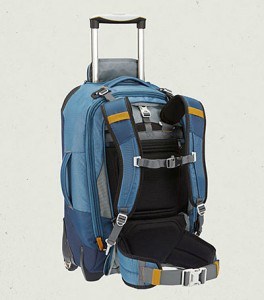
Carry-on Luggage
Besides the practicality of have your child have his own luggage, kids carry on luggage makes a great gift because it helps kids anticipate and get excited for an upcoming vacation.
Encourage your child to pack her own bag in the weeks leading up to a trip and see what they decide to include or exclude.
And for kids who aren’t quite old enough to know what to pack, they’ll have fun either climbing in the suitcase (as our child does) or just carrying it around the house with them.
See Amy’s choices for the best suitcases for kids.
Our pick: [easyazon_link keywords=”Eagle Creek” locale=”US” tag=”gogreentravel-20″]Eagle Creek[/easyazon_link]
Water Bottle
Kids need to stay hydrated just like adults.
Travel water bottles for children come in a variety of shapes and sizes, and for babies my son likes this Pura Kiki Stainless bottle.
Either use a water bottle as a stocking stuffer or for extra fun use the bottle to hide another holiday present in.
Our pick: [easyazon_link keywords=”Camelbak Kids” locale=”US” tag=”gogreentravel-20″]Camelbak Kids[/easyazon_link].
iPad, iPhone or iPod
What makes an iPad an indispensable travel tool?
Its ability to be all things to all kids (and parents!): on one device, you can download movies to watch in the backseat, play music, listen to audio books as a family, play games, and read books.
You can also map your route, check for nearby restaurants and parks, do some light work from the road.
If multiple iPads are not in your budget, consider purchasing an [easyazon_link keywords=”iPod Touch” locale=”US” tag=”gogreentravel-20″]iPod Touch[/easyazon_link].
Essentially, it can do everything an iPad can do, albeit on a smaller screen.
Our pick: [easyazon_link keywords=”Apple iPad” locale=”US” tag=”gogreentravel-20″]Apple iPad[/easyazon_link]
Portable DVD player
If you don’t have an iPad, or have very young children who like to watch the same movies from your DVD collection over and over, a portable DVD player for travel is essential.
They’re cheap to buy, sturdy, and easy for kids to operate.
Our pick: [easyazon_link keywords=”Philips 7″ Portable LCD Dual DVD Player” locale=”US” tag=”gogreentravel-20″]Philips 7″ Portable LCD Dual DVD Player[/easyazon_link]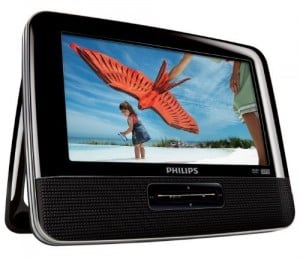
Handheld Video Game Device
Young kids have an easier time navigating and manipulating a handheld gaming device than an iPod, and games tend to have more value.
We travel with a used Nintendo DS for our seven-year-old; the battery lasts a long time, it can take a beating, and leaving it in a hotel room won’t set us back too far.
Our pick: [easyazon_link identifier=”B00E1A1SP6″ locale=”US” tag=”gogreentravel-20″]Nintendo 3DS[/easyazon_link]
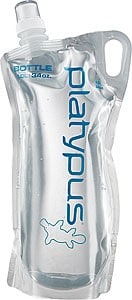
Collapsible Water Bottle
Collapsible water bottles are the newest trend and Amy put together this top guide to collapsible water bottles.
These are great for travelers because of their size and portability and the fact that they easily attach to backpacks, day-packs and camera bags.
Our pick: [easyazon_link identifier=”B00F5IADN6″ locale=”US” tag=”gogreentravel-20″]The Platypus[/easyazon_link].
Glass Water Bottle
We wrote about glass water bottles for the first time over two years ago.
They’ve only become more popular since.
While not the best item for the frequent traveler as they are slightly heavy, they are perfect for use at home, in the car, or at work.
I’ve been using one nearly every day for the past few months and can’t say enough about how much I love it.
It’s sturdy and the water tastes amazing.
We love Eco Vessel and Zulu.
Our pick: [easyazon_link identifier=”B00KE30Q0M” locale=”US” tag=”gogreentravel-20″]Eco Vessel Surf[/easyazon_link] made from recycled glass.
Best Gifts for Travelers ~ Gift Ideas for Green Travelers
Whether you’re buying a present for a green traveler or want to buy something for yourself, there’s no shortage of options available today.
As more and more people become conscious of the environment, companies and manufacturers are taking steps to make sure that these customer needs are met.
If you can’t make up your mind on what to buy or where to start, this guide to the best gifts for travelers will get you on the right track.
A mug will come in handy for those quick camping outs and hiking trips, as it gives the traveler a reusable container for water or coffee.
Because it’s stainless steel a traveler can reuse it again and again, eliminating the need for paper or plastic cups.
While these mugs are often used for short trips, they’ll also come in handy for school or office.
With a stainless steel mug, they can pack up more quickly and get going.
Best Gifts for Travelers Water Bottles
There are few things an eco-friendly traveler needs more than a water bottle.
Different types of water bottles are available, but regardless what you buy make sure that it’s BPA free and it’s stainless steel as it will make the bottle last longer.
There’s a lot to be said about stainless steel water bottles, but their biggest benefit is they’re versatile enough to be used at home or on the road.
Since water bottles are so cheap, you can buy several of these.
Nothing beats a nice pair of eco-friendly shoes, and there are plenty of these available today.
Just go online and you’re going to find an array of green footwear made from recycled materials and using environment friendly processes.
Note that some of these shoes are for casual wear, so if you expect your recipient to wear it while traveling, get a pair of heavy duty travel shoes that can withstand rugged terrain.
This isn’t as hard as you might think as green footwear has become more commonplace.
No traveler will be complete without a travel book, it’s a fact.
Yes there are travel apps available, but what if he / she goes somewhere where there is no reliable Internet connection?
With a good travel book, a traveler will never be lost.
A good travel book will provide information about the country as well as photos, so it’s going to be an invaluable aid.
If your friend likes to travel to foreign countries, consider getting him / her a dictionary or a book with commonly used phrases and expressions, and it will also help if you get them an etiquette book, very handy to prevent misunderstandings and culture shock.
Ask any frequent traveler and he / she will tell you that a compost bin is a must-have, so why not give one as a gift?
They’re very practical, portable and eliminate the odor that would otherwise emanate from the thrash.
Many are sold in 1 gallon sizes although other options are available, and if you’re going to buy one, look for those with a charcoal liner as that helps eliminate odors.
A green traveler will appreciate this because it means they don’t have to rely on whatever the hotel is providing them.
And if they’re staying in simple lodgings chances are they’re not going to get any towels at all.
Towels for home use are large, warm and soft but usually not fit for travel, so it is better if you buy one that’s made of microfiber because it dries quickly, can absorb a lot of water and folds tightly and easily.
A molcajete (mortar and pestle) may not seem like a necessity, but if the traveler enjoys cooking then this will be something they’ll appreciate.
If you’re not familiar with it, a molcajete is the Mexican version of the pestle and mortar, and it’s especially useful for grinding and crushing herbs, spices and foods.
For hikers and campers who like to prepare their own food, this will be indispensable.
Anyone who travels frequently will need a backpack, but for eco-friendly travelers the recycled ones are going to be most appreciated.
Don’t let the term recycle mislead you, because these are as comfortable and dependable as any other backpack.
from the green factor, there are a lot of other factors to consider when buying a backpack, such as the size, capacity, and type and so on.
This all depends on what type of traveler your gift recipient is, so take that into consideration.
However, buying won’t be as difficult as it used to be since there are a lot of options available sold today.
Does your friend have a sweet tooth?
Then a gelato maker will be most welcome.
This might not seem to have anything to do with being green, but it does actually: having their own gelato maker means they won’t to deal with the urge to buy candies and consequently, not worry about where to throw away the wrappers.
Is there a better way to capture the beauty of nature than with a digital camera?
There are a lot of gadgets you can buy, but no question, a camera is what the green traveler will appreciate the most as it allows them to capture the most amazing moments of their trips.
Digital cameras are no longer as expensive as they used to be so finding one won’t be too difficult.
It’s true that smartphones and tablets have a built-in camera, but the quality a real camera provides is superior.
If your friend is picky about pictures, then only a “real” camera will do.
So there you have it, the best gifts for travelers, and whether your recipient has been traveling for a long time or just new to it, there’s no question that they will be grateful and will benefit from any of these gifts.
How Much Cash Can You Travel With
10 Christmas Gift Ideas for the Traveler
Whether you’re a traveler making your own Christmas gift ideas list or a you’re shopping for a present for someone else who loves to travel, we’ve got you covered.
Here are our top 10 Christmas gift ideas for the traveler who’s not currently traveling.
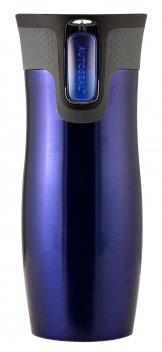
Contigo Stainless Steel Travel Mug
It’s not something you’d bring with you on a long trip, but the [easyazon_link keywords=”Contigo stainless steel travel mug” locale=”US” tag=”gogreentravel-20″]Contigo stainless steel travel mug[/easyazon_link] is great to throw in your bag to transport your coffee to work or school.
Stainless Steel Water Bottle
If you read our blog regularly, you know how much we love our stainless steel, BPA-free water bottles.
They’re great to use while traveling or at home.
Our favorite is the [easyazon_link keywords=”Klean Kanteen” locale=”US” tag=”gogreentravel-20″]Klean Kanteen[/easyazon_link], but check out our Stainless Steel Water Bottle Smackdown to see how others stack up.
Simple ecoSNEAKS
As I mentioned in my ecoSNEAKS Satire review, I love these recycled shoes, but they’re not ideal travel shoes.
They are fun for every day wear, though, and Simple’s ecoSNEAKS would make a great gift.
Lonely Planet’s The Travel Book
I love this book. With its amazing pictures of every country in the world, [easyazon_link identifier=”178657120X” locale=”US” tag=”gogreentravel-20″]The Travel Book[/easyazon_link] will make any lifelong travel want to hit the road again.
Kitchen Compost Bin
Any green traveler who’s on a temporary break will appreciate an under-the-sink [easyazon_link keywords=”kitchen compost bin” locale=”US” tag=”gogreentravel-20″]Kitchen compost bin[/easyazon_link].
They reduce waste and it means you have to take out the trash less often.
And no, they don’t smell.
Eat, Pray, Love by Elizabeth Gilbert
[easyazon_link identifier=”0143038419″ locale=”US” tag=”gogreentravel-20″]Eat, Pray, Love[/easyazon_link] is a fantastic book for anyone who loves to travel and misses the life-changing experiences that come with living in new countries.
Molcajete (Mortar and Pestle)
For the traveler who likes to cook, a molcajete is an excellent gift.
The guacamole you can make with a [easyazon_link keywords=”molcajete” locale=”US” tag=”gogreentravel-20″]molcajete[/easyazon_link] is amazing.
Mountainsmith Recycled Backpack
Do you know a traveler who’s about to take off on a long trip?
Get him or her one of [easyazon_link keywords=”Mountainsmith’s recycled backpacks” locale=”US” tag=”gogreentravel-20″]Mountainsmith’s recycled backpacks[/easyazon_link] and he/she will be forever grateful.
Not only are these backpacks recycled, they’re comfortable and attractive.
Check out our reviews of the Lily recycled backpack and Ivy recycled backpack.
Gelato Maker
Does anyone really need a [easyazon_link keywords=”gelato maker” locale=”US” tag=”gogreentravel-20″]gelato maker[/easyazon_link]?
Technically, no, but having one is life changing.
Especially if you’ve experienced authentic Italian or Argentinian gelato.
This machine will make you want to go back.
Nikon Digital SLR Camera
Whether you’re on the road or at home, the [easyazon_link keywords=”Nikon” locale=”US” tag=”gogreentravel-20″]Nikon[/easyazon_link] is an amazing camera.
When you are not traveling, practice taking photos to hone your skills so you can better capture your travels.
Want More Green Gift Ideas?
Oftentimes a great gift is something you love yourself.
Would it be appropriate for the traveler in your life too?
Hopefully you can add some of these gift ideas to your list of great Christmas gift ideas, especially in an age and time when so many people have everything already.
Best Holiday Gifts for Travelers – Top Picks
It’s the holiday season, which means it’s time to buy some gifts for the favorite traveler on your list.
Here are our top picks for Best Holiday Gifts for Travelers.
Our latest holiday gift guide has many gifts that are made in America, our favorite type of gift.
We all know someone who has too much, and it’s often hard to think of the perfect gift. Here are our top picks.
Touch Digital Camera
The [easyazon_link identifier=”B00S86KZZS” locale=”US” tag=”gogreentravel-20″]Olympus Tough Digital Camera[/easyazon_link] is waterproof, shockproof, and freezeproof – what more could a traveler ask for?
Universal Power Adapter
There’s nothing like arriving in a new country, trying to plug in your laptop, and realizing you brought the wrong travel adapter with you.
The [easyazon_link keywords=”Universal Power Adapter” locale=”US” tag=”gogreentravel-20″]Universal Power Adapter[/easyazon_link] gives you an all-in one option for less than $10.
xShot Camera Extender
Perhaps one of the coolest gadgets I got to try out this year was a [easyazon_link keywords=”pocket xShot” locale=”US” tag=”gogreentravel-20″]pocket xShot[/easyazon_link].
It’s pretty much an extendable arm or handheld tripod so you can take better shots when there’s no one around to ask for assistance.
A highly recommended stocking stuffer that someone will actually appreciate and use, unlike other bric-a-brac that often goes inside stockings.
Reusable Water Bottle
There are excellent stainless steel water bottles, glass water bottles, and fruit infused water bottles.
There are even water bottles with water filters in them now.
For an outdoor enthusiast, a reusable water bottle would be a welcome gift.
Any Food Related Gift
We love kitchen gadgets that bring home the taste of travel.
Be it a guacamole making molcajete or a tagine, here are our favorite gadgets, from gelato makers to pasta makers that bring home the tastes from far away lands.
While we are on the subject of food, we really, really love food as gifts.
Fill a basket with some gourmet pasta and sauce. Bring a box of endangered species chocolate.
Bring some desserts from a sustainable restaurant, bread from a nearby bakery, or beer from a local craft brewery.
It’s wonderful when you know a gift will actually be used/eaten and won’t take up any space in the receiver’s home.
Any Technology Gadget
We really like the idea of portable travel chargers and solar chargers too.
Check our guide to the best technology gifts and gadgets for travelers for gifts for the travel techie in your life.
Travel Journal
We always love the Moleskine line of products.
There’s nothing like the feeling of pen to paper.
One can never have too many blank pages to fill with all their memories.
Here are some more travel journals.
TuGo Cup Holder
What an awesome invention, as when you’re rushing through the airport, you never have enough hands.
The TuGo Cup holder attaches to your bag and allows you to keep moving with your favorite beverage until you reach the waiting area.
Travel Gift Cards
There are websites in which you can buy gift cards for your favorite airline or hotel.
They have gift cards saving you from 4% to 17% for places including Disney, Southwest, American Airlines, US Airways, Jet Blue, Mariott, Hyatt, Four Seasons, and more.
For a traveler who is spending from $100 to $2000 at one of these places, the savings for such a card can be up to $350!
We’ve previously written about how you can essentially get a 10% off coupon for American Airlines by buying gift cards at a discount.
Awesome Best Holiday Gifts for Travelers Ideas
If you’re curious about previous year favorites, check out these posts:
Happy holidays, and enjoy shopping for these best holiday gifts for travelers.
There’s sure to be the perfect gift idea for everyone on your list.
Stocking Stuffers for Travelers
Stocking Stuffers for Travelers – The holiday shopping season is upon us!
If you have travelers on your gift list this year, surprise them with one of these 10 awesome stocking stuffers for travelers.
Not only do all of these Christmas stocking stuffer ideas meet the needs of all types of travelers, they’re also budget-friendly.
Darn Tough Vermont Winter Socks
I love Darn Tough [easyazon_link keywords=”Vermont Merino Wool or Coolmax socks” locale=”US” tag=”gogreentravel-20″]Vermont Merino Wool or Coolmax socks[/easyazon_link] for winter travel.
Whether I’m doing some serious trekking in the snow, skiing, or city touring in the rain, Darn Tough has styles and patterns that keep my feet warm and dry.
Plus, they’re fun and colorful.
Knock Knock Travel Log
If you’re not familiar with the Knock Knock Stuff company, you need to be!
These creative people sell everything from car Bingo cards to packing lists, and every type of list, post-it, or stationery in-between.
Most of their items and shoppers can find a wide selection on [easyazon_link identifier=”1601063431″ locale=”US” tag=”gogreentravel-20″]Amazon[/easyazon_link].
[easyazon_link identifier=”B009CSMGSK” locale=”US” tag=”gogreentravel-20″]Grand Trunk Blackout Hooded Neck Pillow[/easyazon_link] I bring my hooded blackout pillow on planes, in cars, and while camping.
Not only does the memory foam neck pillow make it easy to get comfortable on the road, but the attached hood grants me darkness when I need it.
Grand Trunk is an eco-company I trust.
Most would appreciate this pillow in their stocking.
Safety-Tat Child Safety Stickers
These easy-to-apply temporary tattoos adhere to kids’ skin and list safety information like a cell phone number or allergy information.
Perfect for use in crowded travel situations like theme parks, Safety-Tat appeals to kids and adults.
[easyazon_link identifier=”B002XVUIXS” locale=”US” tag=”gogreentravel-20″]Pick them up on Amazon[/easyazon_link] for a great price.
You’ve seen these oddly shaped Frisbee sailing around!
They’re actually not just for kids, but fun for anyone needing to exercise and stretch their legs during trips.
We bring ours in the car for road trips (it only weighs 2 ounces) and it can easily be packed in a backpack, too.
At less than $10, the [easyazon_link identifier=”B0000789T2″ locale=”US” tag=”gogreentravel-20″]Aerobie[/easyazon_link] should be in every kid and kid-at-heart’s stocking!
Pocket Soap to Go
Soap in stick form, that you can bring with you in the outdoors or on the road.
It’s only $2.25 for the small tube, and lasts for multiple trips.
Perfect as a stocking stuffer for travelers who spend a lot of time away from showers!
GOgroove Panda Portable Mini Speakers
[easyazon_link keywords=”GOgroove Panda Portable Mini Speakers” locale=”US” tag=”gogreentravel-20″]GOgroove Panda Portable Mini Speakers[/easyazon_link] cute as a button, these speakers pack a powerful punch, working great when more than one kid (or adult) wants to listen to a backseat movie or TV show in the car.
We keep one in our car at all times!
Family Travel Kits
With kits for all ages and interests, these innovative travel kits are a no-hassle way to shop for traveling kids.
Plus, you can customize your kits and buy items a la cart.
RumbaTime Watches
These fun and funky watches are cheap enough that you won’t worry about losing one on the road, and bright enough that you won’t lose one to start with.
Timbuk2 Hidden Duffel
It’s a full-sized duffel bag that folds down into a small envelope, allowing travelers to pack it in other luggage and use when needed!
I love using my hidden duffel after a work conference or family vacation when my souvenirs and baggage seems to grow en route.
Shopping Tips for Environmentally Friendly Green Furniture
Growing number of consumers are becoming concerned with environmentally friendly practices in all aspects of their life.
This concern now encompasses environmentally friendly green furniture that they bring into their homes.
The furnishings are a large part of what turns a house into a home.
While some people who favor an ultra-modern look may opt for materials like glass, metal and plastic, none of these really compares with the beauty and authenticity of wood.
Fortunately for these consumers, they have more choices than ever before when it comes to finding green furniture for their Eco Friendly Home.
It may require a bit more effort, but understanding why environmentally conscious furniture is important provides excellent motivation.
Eco Friendly Harvested Wood
Conventionally harvested lumber is usually obtained with clear cutting techniques.
When this method is utilized, the entire forest is leveled.
Every tree is removed and so is all other vegetation.
Frequently, massive machinery is used to remove every trace of vegetation.
In some instances, the land is then burned and treated with herbicides that prevent anything other than the trees that will be planted from growing.
When the land is seeded, forestry workers focus on just one type of tree, each one spaced a precise distance from the others.
Where once there was biodiversity and a naturally thriving eco sphere there is now a ruthlessly controlled crop that the lumber company will someday return to claim.
Environmentally Friendly Green Furniture
Clear cut methods are ecologically devastating.
They take away valuable habitat that the wildlife depends upon.
Clear cutting may also lead to soil erosion, landslides and a host of other environmental problems.
The detrimental effects on nature are well known, yet most companies that harvest trees continue to use these practices.
Unless consumers do their homework, they are likely to buy wood furniture where the raw materials were obtained through clear cutting.
Fortunately, there is a growing number companies in the forestry industry who understand the delicate balance of the ecosystem.
They work steadily toward sustainable business practices that will serve them and the environment well over the long run.
Consumers who seek out wood products where the raw materials were sustainable sourced are supporting these efforts in a meaningful and fundamental way.
Initially, it seems like it would be impossible for people to know where the wood that made their furniture came from.
That’s where the Forest Stewardship Council comes in.
They are a global organization that has set strict standards for sustainable forest management.
Part of their function is to certify companies that adhere to these standards.
The Forest Stewardship Council, or FSC, certifies not only companies that harvest lumber responsibly, but also manufacturers that use environmentally-friendly practices.
When a consumer sees a piece of furniture featuring the FSC certification, they can feel confident that the piece they are purchasing is as green as it can be.
The FSC is not alone in its quest.
There are other reputable organizations that also provide certification for sustainably sourced wood products.
The Rainforest Alliance utilizes the SmartWood label while Scientific Certification Systems places the Green Seal on qualified wood products.
However, the FSC is the only global organization and their certifications are the most widely seen and most highly coveted by businesses that deal in wood products.
Rainforest Alliance Eco Friendly Products
Reclaimed Wood Furniture using Repurposed Lumber
Another fantastic way to acquire green wood furniture is by choosing pieces made with reclaimed or repurposed lumber.
These unique and beautiful furnishings all have a unique story to tell.
Wood that is now used for a kitchen table may have once been part of the walls of a barn.
Because the lumber has gone through decades or even centuries of weathering, it acquires a distinctive look that’s nearly impossible to replicate.
Reclaimed wood furniture is a remarkably green choice.
When someone decides to take down a barn, shed or other wooden structure, those materials can often end up in the landfill.
However, an environmentally conscious person might realize the value in all of that old lumber.
By selling it to a furniture manufacturer, they not only turn a profit but also keep huge amounts of waste out of landfills.
Reclaimed wood furniture can be elegant or rustic.
It makes amazing kitchen dinning table, chair sets and many other kitchen furniture that’s both stylish and functional.
The warm wood makes any kitchen instantly feel cozy.
Of course, reclaimed wood is suitable for use in any room of the house.
Bed frames, chests, sofas and coffee tables are just a few of the common examples.
Environmentally Friendly Furniture Manufacturers
Wood that comes from sustainable sources becomes even more environmentally friendly when it is combined with organic fabrics.
Furniture manufacturers who are aware enough to utilize green lumber are usually also on top of choosing upholstery that is organic and dyed without the use of harsh chemicals.
These eco friendly manufacturers even pay attention to how each piece of lumber is painted, glued or finished.
They’ll use safe, organic processes every time.
This means choosing non-VOC substances for joinery and finishing.
VOCs, or volatile organic compounds, are known to give off harmful gases.
This off gassing doesn’t just happen when the furniture is brand new.
In some cases the furniture can continue to give off potentially harmful gasses for years.
Still, many conventional paints and stains contain VOCs.
Consumers interested in a more environmentally conscious lifestyle are now insisting on limiting these compounds in their homes.
Some furniture manufacturers are heeding that demand.
Furniture that has received the FSC certification is likely to be finished or painted with non-VOC materials.
Environmentally friendly green furniture is the perfect way to decorate any room.
In the kitchen, green wood furniture provides a comfortable place to gather as a family.
Eco conscious wood can also be used to construct durable and beautiful bedroom furniture, and it can be a fantastic way to finish a living room.
As concerned consumers become better educated and begin to insist upon furnishings that are more earth friendly, it stands to reason that more and more harvesters and manufacturers will heed the call.
By choosing green wood furniture, people can take an important stand for environmental health and ensure that retailers who use sustainable practices are successful.
Look here for tips when shopping for green wooden furniture
Eco-Friendly Memory Foam Pillow Review of the Best
If you’ve ever slept on an egg crate foam mattress or a polyurethane-based foam pillow, you know that squishy, polyurethane memory foam can be hot and is not breathable.
Plus, polyurethane foams are not good for the environment and older ones may contain PBDEs, which can be toxic to your health.
Fortunately, there are more eco-friendly alternatives to traditional [easyazon_link keywords=”memory foam pillow” locale=”US” tag=”gogreentravel-20″]memory foam pillow[/easyazon_link].
Why buy a memory foam pillow?
Relax the Back EcoMemoryFoam Pillow
EcoMemoryFoam is made of plant-based materials and produces zero emissions.
I was sent a PureMemDown Dual Pillow by [easyazon_link keywords=”Relax the Back” locale=”US” tag=”gogreentravel-20″]Relax the Back[/easyazon_link] to try out.
It’s comfortable and high-quality, and I imagine it would be great for people with chronic back pain.
I like that this pillow is made in the USA, which means it didn’t have to travel thousands of miles and waste fuel to get to me.
Plus, it comes with a removable bamboo cover.
Magniflex GeoEthic Pillow
Like the Relax the Back pillow, the [easyazon_link keywords=”Magniflex GeoEthic pillow” locale=”US” tag=”gogreentravel-20″]Magniflex GeoEthic pillow[/easyazon_link] is comfortable and made to last.
The Magniflex pillow contains no materials that are toxic or non-biodegradable, but it’s made in Italy so there is an environmental impact from that aspect.
According to Magniflex’s website, the company “strongly believe[s] that environmental safety, both for our employees and customers, and safeguarding the earth’s natural resources must play an integral part in our manufacturing process.”
If you love traditional memory foam but don’t like the negative impact it has on the environment, I would highly recommend checking out these two pillows.
As with all pillows, I think perfection lies in the preference of the sleeper.
I think these pillows are both great and I would recommend testing them out before choosing the one that’s best for you.
Learn what’s in some of your everyday use products, like pillows, your carpeting and your couches and other hidden toxins in homes.
Also, so many products contain PBDE’s, which can be a big health concern.
When to replace pillows?
It is generally a good idea to replace your pillows every few years.
If you have not spent a lot of money on them, this is a fairly easy thing to do.
There are other many factors to consider regarding how frequently you should replace your pillows.
Consider if you have children; how often you change out the pillow case; do you have a zippered pillow cover on it as well as the pillow case; and are there people in your home with allergies.
Also consider if someone has been very sick and using the pillow.
When you buy a more expensive memory foam pillow, keeping it encased with a zippered cover will help you in the long run from wear and tear as well as keeping it cleaner and more hygienic.
Investing in dust mite encasement is also a wise idea and will increase the life of your pillow.
It will also help those people in your home who may have dust mite allergies, as dust mites live and thrive in pillows, mattresses, blankets and bedding.
One word of caution: Do your homework and beware of green washing.
Some memory foam pillow brands claim to be eco-friendly, when in reality their products are made with 10% eco-friendly materials and 90% polyurethane.
You will most likely enjoy having a memory foam pillow, just be sure you know what you are buying, and be sure to take care of it so it stays clean for better health for its user.
Useful Eco Gadgets for the Green Traveler
Eco gadgets for the Green Traveler are most definitely a growth market now.
Sure there are lots of gadgets that are a waste of time and money, but there are also some gadgets that are genuinely useful.
In this article, Dan talks about 10 of his favorite eco-friendly gadgets that are designed with the green traveler in mind.
Wind up Torch
If we’re going camping or anywhere else where there’s likely to be a lack of lighting when night falls, then we need a torch. Conventional torches eat through lots of batteries, so something rechargeable would be great.
Rather than use standard rechargable batteries, why not have a [easyazon_link keywords=”wind up torch” locale=”US” tag=”gogreentravel-20″]wind up torch[/easyazon_link]?
I have two of these torches myself, and they’re fantastic!
Just a minute or so of winding up and you get around 30 minutes of torch light.
In practice, the light dims after a few minutes, so you just top it up again.
You never need to worry about finding some batteries ever again!
Wind Up Walkie Talkies
On the theme of wind up gadgets, there’s a great way to keep in touch with your party, or kids, or anyone really, and that’s with a walkie talkie.
However, we hit the same issues with batteries, so how about some wind up [easyazon_link keywords=”walkie talkies” locale=”US” tag=”gogreentravel-20″]walkie talkies[/easyazon_link]?
For a minute of winding, you get 2 minutes of talking time and 10 minutes of standby time.
Perfect for emergencies, and you don’t need to worry about mobile phone reception either.
Wind up 2-Way FM/AM Radio
If you want to go a little more advanced, then the [easyazon_link keywords=”2-Way AM/FM/NOAA Emergency Crank Radio” locale=”US” tag=”gogreentravel-20″]2-Way AM/FM/NOAA Emergency Crank Radio[/easyazon_link] gives you a more bulky version of a walkie talkie, but you also get FM and AM radio.
This means you can listen to local radio stations whilst you’re out traveling.
Again, no need to worry about batteries, as you just crank it up for more hours of musical enjoyment.
Freeloader Solar Charger
If you are taking a mobile phone, games console or an MP3 player, you’ll only get a few hours use out of them on a single charge.
If you’re out traveling somewhere sunny, then you can enjoy your gadgets for much longer with a [easyazon_link keywords=”Freeloader Solar Charger” locale=”US” tag=”gogreentravel-20″]Freeloader Solar Charger[/easyazon_link].
In sunny conditions, the Freeloader charges up its internal battery in about 7 to 9 hours.
When you want to charge up your gadget, just hook it up to the Freeloader charger.
2C Solar Cap
When you’re walking about at night, you’ll need a torch to see what you’re doing, and you could use the wind up torch mentioned above.
However, if you need both hands free to read maps, then the [easyazon_link keywords=”2C Solar Cap” locale=”US” tag=”gogreentravel-20″]2C Solar Cap[/easyazon_link] is really useful.
I’ve tried it myself and the bright white LEDs are at the perfect angle to light the path in front of you as you’re walking.
You only need to charge the cap up in sunlight for a couple of hours to get a few hours of light for night hiking.
SteriPEN Water Sterilization Pen
Right, time for a drink, but you’ve run out of drinking water.
How do you know the locally available water is safe to drink?
There’s no need to worry with a SteriPEN.
The SteriPEN uses ultraviolet light to sterilise clear drinking water (i.e. filtered water) to kill any nasty bacteria that remain in the water.
The [easyazon_link keywords=”SteriPEN” locale=”US” tag=”gogreentravel-20″]SteriPEN[/easyazon_link] comes in a range of sizes, including a very portable traveler size.
A single set of AA batteries is capable of sterilizing up to 100 liters of water, and even then you can use rechargeable batteries.
Solar Pocket Shower
It’s been a long days walk and you need a shower, thankfully you set up a [easyazon_link keywords=”Solar Pocket Shower” locale=”US” tag=”gogreentravel-20″]Solar Pocket Shower[/easyazon_link] in the morning and filled it up with 10 litres of cold water.
Thanks to the sun’s energy, the water in the black PVC-free bag heated up, meaning you can have a nice warm shower in.
Popup Shelter with Solar Shower
Stripping in the middle of a field may not be great for your modesty, so if you’d like to be a little more discrete, consider the [easyazon_link keywords=”popup shelter with a solar shelter” locale=”US” tag=”gogreentravel-20″]popup shelter with a solar shelter[/easyazon_link].
Basically its the same solar shower, but in a tall tent-like cubicle to allow you to shower and change in comfort.
Poop Box
Nature calls, so where’s the nearest bush?
Well save the bush the trauma and try the cardboard toilet instead!
The rather oddly name device contains disposable liners, which can be buried when you’re done.
The bags are biodegradable, so they do no harm to the environment.
Solar-powered Backpack
Finally we need something to keep all of our gadgets in!
The Blackhills [easyazon_link keywords=”Solar Backpacks” locale=”US” tag=”gogreentravel-20″]Solar Backpacks[/easyazon_link] are designed to top up all your mobile phone, PDA, games console, MP3 gadgets, etc.
Thanks to a whole collection of charging adapters, you’ll easily be able to charge up pretty much any gadget you can throw at it.
There’s even a headphone socket so that you can keep your music gadgets dry inside the backpack.
So there you go, 10 eco gadgets for your next adventure.
Got any eco gadgets you recommend for travelling?