How to Become a Traveling Locavore
The locavore movement, defined as trying to eat only food grown or harvested within a 100-mile radius of your home, started in San Francisco in 2005 as a challenge for people in the Bay Area. The movement grew quickly and in November of last year, Oxford University Press named “locavore” its word of the year.
I’ve been a proponent of eating and shopping locally ever since I began to understand the impact my food, clothes, and everything else I buy has on the environment when it has to travel thousands of miles to get to me. I try to buy my produce at farmer’s markets, do most of my clothes shopping at thrift stores, and dine out at local restaurants.

But it isn’t always easy. While I wholeheartedly support the concept of being a locavore, I need variety. Try as I might, I’m just not happy eating the same kind of locally-grown apple every day or even wearing my favorite sweater from Goodwill each week.
Luckily for me, I love to travel. And I can be a locavore by eating foods produced within 100 miles of wherever I am - be it Buenos Aires or Bangkok. As a traveling locavore, you get to visit amazing places, experience exotic cultures, and dine on delectable local food - all while supporting the local economy and making earth-friendly eating choices. When you’re at home (wherever home may be), you have a limited number of different local foods. But when you travel around the world, you’ll discover delicious (and sometimes not-so-delicious) local foods you didn’t even know existed.
Becoming a locavore is easy. According to the original Locavores, here’s how you should prioritize your food buying to have the lowest environmental impact:
- locally produced
- organic
- family farm
- local business
- terroir (which means “purchase foods famous for the region they are grown in and support the agriculture that produces your favorite non-local foods such as Brie cheese from Brie”)
- always buy from a farmer’s market before supermarket
To become a traveling locavore you prioritize your food in the same way, but have the added benefit of experimenting with produce, meat, and dairy products native to the region you’re visiting. In the coming weeks, we’ll explore what it means to be a traveling locavore in a number of destinations - from Placencia, Belize to Dingle, Ireland.
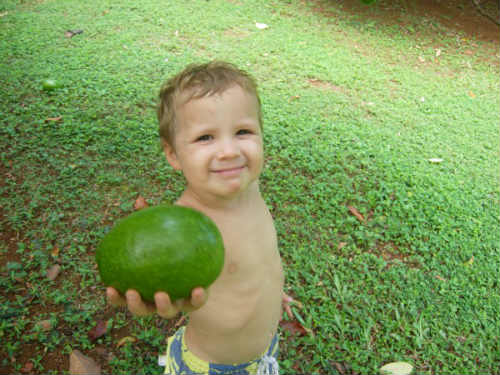
photo by al pohaku

Pingback from Shades of Green Travel: Food | Go Green Travel Green
Time: March 27, 2008, 8:14 pm
[…] and organic food, even if it’s not the cheapest or easiest option. She’s not a die-hard locavore, but she’ll walk three miles to the local farmers market before heading to the chain grocery […]