CamelBak BPA-Free Better Bottle Water Bottle Review

One of the easiest ways to be a greener traveler is to opt for a reusable water bottle instead of bottled water. However, one crucial concern of using reusable water bottles is the fact that some contain BPA and phthalates. (If you don’t know what BPA and phthalates are, not to worry, I will be posting further about these toxic chemicals later this week.)

CamelBak has recently committed to making all of its products BPA and phthalate free and they were kind enough to send us a bottle to test out. Here are my thoughts:

I tested a 750ml bottle. (The Classic Cap is currently BPA and phthalate free and the bottle with a straw, Better Bottle with Bite Valve, will be BPA and phthalate free next month in May 2008).

Here’s what I subjected by bottle to over the course of the weekend:

  • Initial dishwashing
  • Two days at the office
  • Health club workout
  • Afternoon walk around DC’s Tidal Basin to see the Cherry Blossoms and the festivities for the Cherry Blossom Festival
  • Other touristy DC activities throughout the weekend (Air and Space Museum, National Gallery of Art, Botanical Gardens)

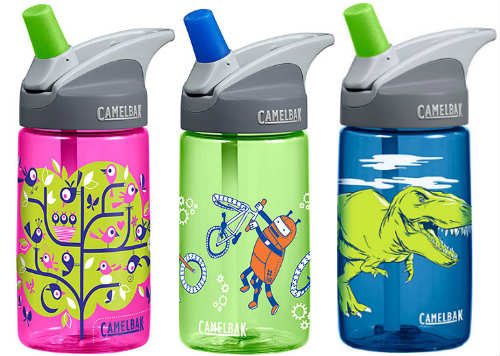
CamelBak Better Bottle

After participating in these rigorous activities here’s how the new CamelBak scored on a scale of 1-5 with 1 as the worst and 5 as the best. *Please note that these ratings are completely subjective.*

  • Weight (without water): 4 It feels like a lightweight plastic bottle. It’s technically made out of Tritan, a copolyester. (The company that makes this material is US manufacturer Eastman.)
  • Ease of Transport: 5 I love the loop on the cap; it’s incredibly easy to attach the loop to my bag via a carabiner.
  • Looks: 4 It’s a fairly attractive water bottle.
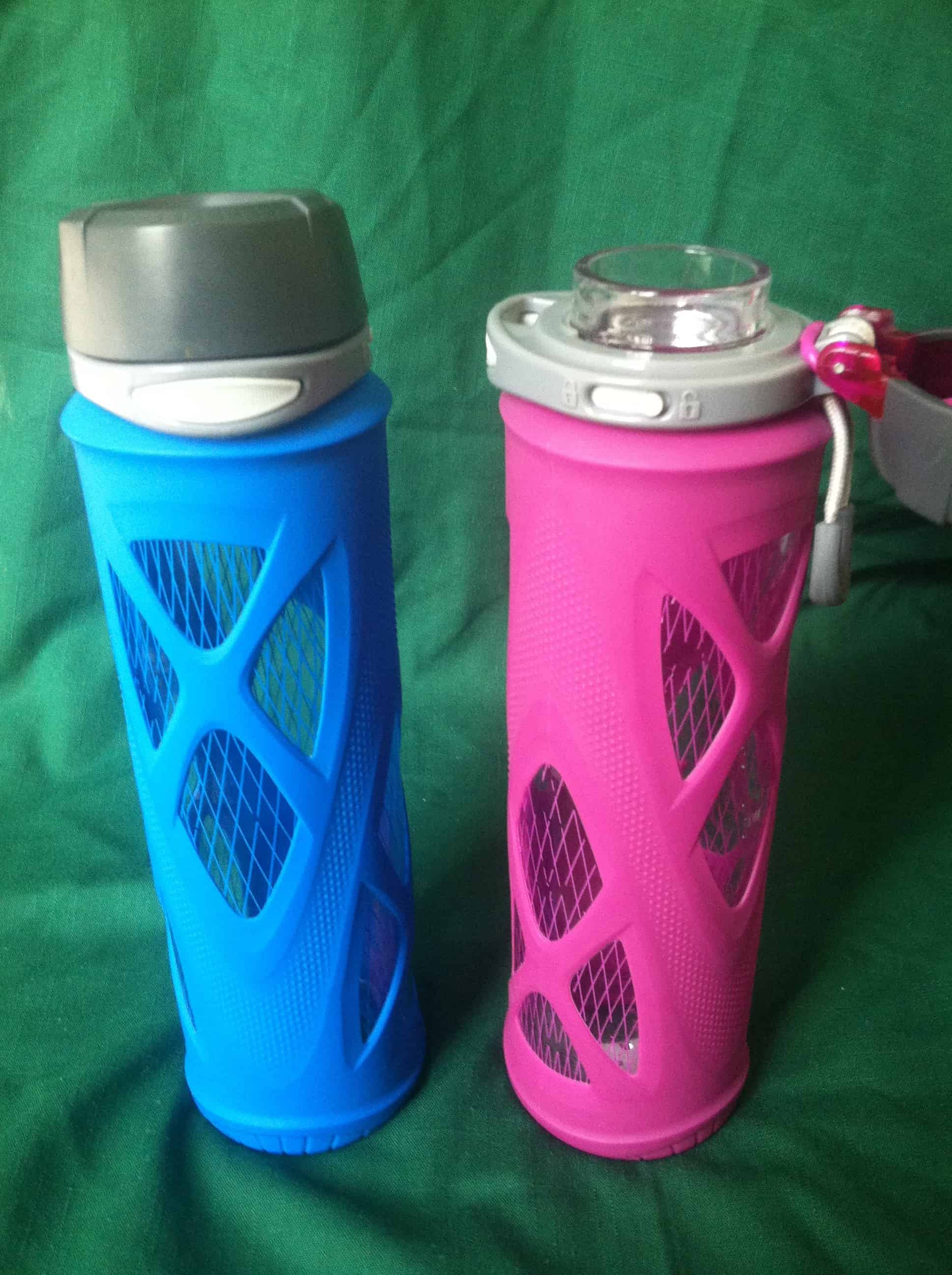
  • Ease of drinking: 2 For some reason the opening was not a good diameter for me. Whenever I drank out of it it hit the top of my nose– it’s skinnier than a traditional Nalgene and wider than a Klean Kanteen.
  • Durability: NA Since I only used it for a weekend I don’t feel that this I can adequately judge
  • Taste of Water after two days: 3 This is the true water bottle test- if you let the water sit in it for a few days does it absorb a weird taste? In the case of the CamelBak Better Bottle, it has a slight plastic-y taste to it.
  • Smell of Water in Bottle: 1 Almost as important as the taste of the water, smell can make or break a food or drink experience. This was the real downside of the bottle; every time I took a sip I smelled a very plastic-y scent in the bottle. It was just kind of icky.
  • Overall: 3 I commend CamelBak’s commitment to manufacturing BPA and phthalate free products; however, I just don’t think the CamelBak Better Bottle is for me. I like it more than a Nalgene, but less than a Klean Kanteen.

If you currently use and like the Better Bottle then I recommend that you look further into purchasing a new BPA-free one. But first, be sure to read my post on Thursday about the chemicals in water bottles. Then you can be sure that you’re drinking to your health!

6 Responses to “ CamelBak BPA-Free Better Bottle Water Bottle Review ”

  1. Here are some glass water bottles for drinking water from. I saw on the Today Show today that they recommend using glass if at all possible, then you don’t have to worry about chemicals leaching into the water.

    http://www.aquasana.com/product_detail.php?product_id=45

  2. Aaron- thanks for the link. I completely agree that glass or stainless steel bottles are the best choice for health and safety. (Tomorrow I’m actually writing a comparison of all water bottles and the chemicals in them.) I’ll be curious to hear your thoughts!

  3. I Just bought three of the 2007 Camelbak flip-n-sip bottles marked with the #7 and pc recycling are thers bpa safe or not?? Appreciate the info……..Trying to be healthy by drinking more water???
    Ed

  4. [...] bottle companies are now starting to use a different compound called Tritan. As I mentioned in my review of a BPA free Better Bottle by CamelBak, thus far tests have revealed no problems with Tritan. Tritan is a copolyester and while I’m [...]

  5. Ed- I completely agree! I’ve always tried to drink a lot of water and I just figured that any plastic was safe. #7 bottles may or may not contain BPA. The 2007 CamelBaks do contain BPA; it’s their newest May 2008 kind with the flip-n-sip that don’t contain BPA. If you want to read more about the different #’s and what they mean read the summary at the bottom of this post: http://gogreentravelgreen.com/green-environmentally-friendly-products-travel-gear/how-to-choose-a-healthy-water-bottle-and-34-resources/

    Also, I would suggest contacting CamelBak and letting them know that you just recently purchased 3 of their bottles and have only recently learned that they contain BPA and that now CamelBak makes BPA free bottles. Who knows, maybe they’ll send you a new one for free! (I’ve found the CamelBak reps to be extremely friendly.) Hope this helps.

  6. [...] month, we reviewed the new BPA-free CamelBak Better Bottle. And with the recent news about the potential dangers of bisphenol A, even die-hard Nalgene fans [...]

Leave a Reply

You can use these XHTML tags: <a href="" title=""> <abbr title=""> <acronym title=""> <blockquote cite=""> <code> <em> <strong>